[email protected]
+86-13605711675
When it comes to choosing the right gear transmission for your industrial needs, the decision often comes down to selecting between worm gearboxes and helical gearboxes. These two gearbox types each have distinct characteristics, advantages, and limitations that make them suitable for different applications.
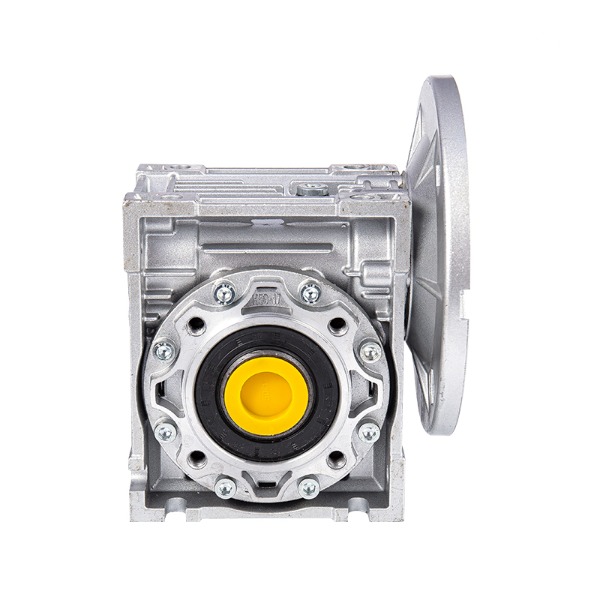
A worm gearbox consists of a worm (a type of screw) that meshes with a gear to transmit motion. Worm gearboxes are known for their ability to provide high torque output with compact size and for their ability to achieve high-speed reduction in a single step.
Key Features of Worm Gearboxes:
Helical gearboxes are characterized by gears with teeth that are cut at an angle to the axis of rotation, resulting in smoother operation compared to straight-cut gears. These gearboxes are typically used for applications requiring high-speed, high-power transmissions with minimal noise.
Key Features of Helical Gearboxes:
| Feature | Worm Gearbox | Helical Gearbox |
|---|---|---|
| Torque Transmission | High torque, ideal for heavy loads | Moderate torque, efficient for general use |
| Efficiency | Lower efficiency due to friction losses | Higher efficiency, less friction |
| Speed Reduction | Significant speed reduction in a compact form | Moderate speed reduction, requires multiple stages |
| Self-locking Capability | Yes, prevents reverse motion | No, requires external braking |
| Noise and Vibration | Higher noise and vibration | Quiet and smooth operation |
| Size and Compactness | Very compact, ideal for tight spaces | Larger and bulkier compared to worm gearboxes |
| Cost | Generally less expensive | Slightly more expensive due to manufacturing complexity |
Worm gearboxes are best suited for applications that require high torque output in a compact form, particularly when there is a need for self-locking mechanisms. They are commonly found in conveyor systems, elevator drives, and lifting equipment.
Helical gearboxes, on the other hand, are preferred for applications that demand higher efficiency and quieter operation, such as in automotive transmissions, pumps, and gear reducers.
When selecting between worm gearboxes and helical gearboxes, it’s essential to evaluate factors like the required torque, efficiency, noise levels, and available space. For heavy-duty, low-speed applications, worm gearboxes offer distinct advantages. However, for applications requiring high-speed operations with minimal noise and higher efficiency, helical gearboxes are a better choice.
Both worm gearboxes and helical gearboxes require regular maintenance to ensure their longevity and optimal performance. However, due to the higher frictional losses in worm gearboxes, they tend to have a shorter lifespan compared to helical gearboxes, which are more efficient and experience less wear and tear.
Maintenance Tips for Worm Gearboxes:
Maintenance Tips for Helical Gearboxes:
Both worm gearboxes and helical gearboxes have their place in industrial applications, with each offering distinct advantages and disadvantages. The choice between the two depends on your specific requirements—whether it’s high torque output, efficiency, quiet operation, or compact design. By understanding their differences and applications, you can make an informed decision on which gearbox is right for your needs.
1. What is the main difference between worm gearboxes and helical gearboxes?
Worm gearboxes offer high torque in a compact design and are self-locking, while helical gearboxes provide higher efficiency, quieter operation, and can handle higher loads.
2. Which gearbox is more efficient, a worm or helical gearbox?
Helical gearboxes are generally more efficient than worm gearboxes because they experience less friction during operation.
3. Can worm gearboxes be used in high-speed applications?
Worm gearboxes are better suited for low to medium-speed applications. For high-speed operations, helical gearboxes are preferred due to their higher efficiency.
4. What types of applications benefit from worm gearboxes?
Worm gearboxes are ideal for applications requiring high torque and self-locking features, such as hoists, lifts, and conveyor systems.
5. Are helical gearboxes more durable than worm gearboxes?
Yes, helical gearboxes tend to be more durable due to their higher efficiency and lower friction, which results in less wear and tear over time.

1. What is an NRV Worm Gear Reducer? The NRV worm gear speed reducer is a widely used mechanical device...
View MoreIn the stage of modern industrial precision transmission, Worm Gear Machine Screw Lift has become the cor...
View MoreWhat is worm gear speed reducer A worm gear speed reducer is a reduction transmission device composed of ...
View More1. Introduction to Worm Gear Speed Reducers A worm gear speed reducer is a specialized type of gearbox de...
View More


We value your suggestions and questions. If you have any questions about our products and services, please contact us. We will treat you responsibly and reply to your information as soon as possible.