-
 [email protected]
-
 +86-13605711675
[email protected]
+86-13605711675

In the world of mechanical transmission systems, choosing the right type of gearbox is crucial to ensuring efficiency, durability, and performance. Among various gear types, worm gearboxes stand out due to their unique design and specific applications. However, it is essential to understand how worm gearboxes compare with other gear types like spur gears, helical gears, and bevel gears to determine the best fit for your needs.
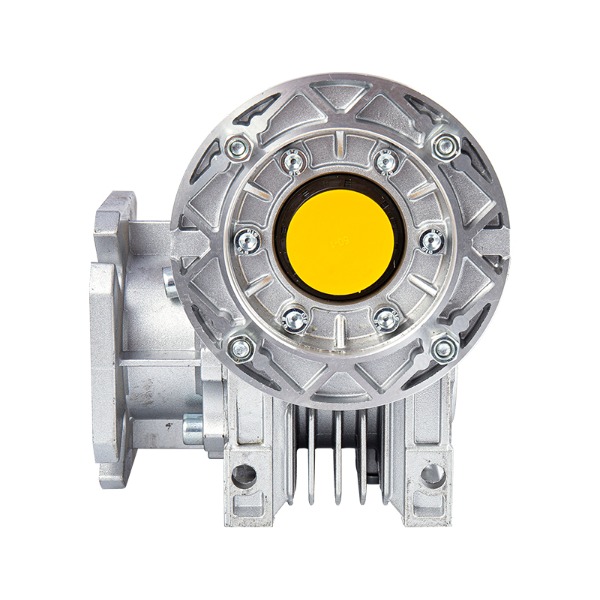
A worm gearbox is a specific type of gear set where a worm (a screw-like gear) meshes with a worm wheel (a gear with teeth that engage the worm). This design allows for high torque transmission and is capable of achieving a significant reduction ratio in a compact space. Worm gearboxes are widely used in applications where space constraints and high torque are a concern, such as in conveyors, lifts, and even some automotive systems.
While worm gearboxes are highly efficient in specific applications, it’s important to compare them with other commonly used gear types in terms of their benefits and drawbacks.
Spur gears are the most common type of gear and consist of straight teeth that are parallel to the axis of rotation. They are simple, cost-effective, and efficient in power transmission.
| Characteristic | Worm Gearboxes | Spur Gears |
|---|---|---|
| Efficiency | Lower efficiency due to friction | Higher efficiency |
| Torque Transmission | High torque and reduction ratios | Lower torque, higher speed |
| Compactness | Very compact for high reduction | Bulkier for high reduction ratios |
| Applications | Lifts, conveyors, low-speed systems | Motors, machinery, pumps |
Drawbacks of Spur Gears:
Helical gears feature teeth that are cut at an angle to the axis of rotation. This design provides smoother and quieter operation compared to spur gears, but they require more precise alignment.
| Characteristic | Worm Gearboxes | Helical Gears |
|---|---|---|
| Efficiency | Lower due to friction | Higher efficiency |
| Noise and Vibration | Higher noise levels | Quieter operation |
| Load Distribution | Less evenly distributed | Evenly distributed load |
| Applications | Heavy-duty applications | Automotive, industrial machinery |
Drawbacks of Helical Gears:
Bevel gears are designed to transmit motion between intersecting shafts, typically at 90 degrees. They are often used in applications where the axes of the input and output shafts are not parallel.
| Characteristic | Worm Gearboxes | Bevel Gears |
|---|---|---|
| Torque Handling | High torque capacity | Medium to high torque capacity |
| Gear Orientation | Right-angle drive | Right-angle drive |
| Load Distribution | Uneven load distribution | Even load distribution |
| Applications | Lifts, winches, conveyors | Automotive, industrial, marine |
Drawbacks of Bevel Gears:
Compact Design: Worm gearboxes allow for a reduction in size and space, making them suitable for tight spaces.
High Reduction Ratios: Worm gearboxes can achieve high reduction ratios in a single stage, which is not possible with many other gear types.
Self-Locking: This unique feature is especially useful in applications where load holding is essential, such as in lifts and hoists.
Quiet Operation: Due to the nature of the worm-gear mesh, these gearboxes tend to operate relatively quietly compared to spur or bevel gears.
Lower Efficiency: Worm gearboxes suffer from friction between the worm and the worm wheel, leading to lower efficiency compared to other types of gears.
Heat Generation: Due to the friction, worm gearboxes generate more heat, which may require cooling or lubrication for optimal performance.
Cost: While relatively inexpensive for some applications, worm gearboxes can be more costly in high-torque applications due to their need for high-precision manufacturing.
Worm gearboxes are ideal for applications requiring significant reduction ratios and compact designs. They are commonly used in industries such as:
Choosing the right gearbox for your application depends on several factors, including space constraints, torque requirements, and efficiency needs. While worm gearboxes offer benefits such as high reduction ratios and self-locking features, they come with limitations like lower efficiency and heat generation. Other gear types such as spur gears, helical gears, and bevel gears provide their own advantages, particularly in terms of higher efficiency and quieter operation.
Understanding the specific needs of your application will help you determine which gearbox type is best suited for your requirements. When in doubt, consulting with an expert in gearbox transmission systems can provide valuable insights.
1. What is the main advantage of a worm gearbox over other gears?
2. How does a worm gearbox compare in efficiency to other types of gears?
3. Are worm gearboxes suitable for high-speed applications?
4. Can worm gearboxes be used in outdoor or harsh environments?




 English
 русский
