[email protected]
+86-13605711675
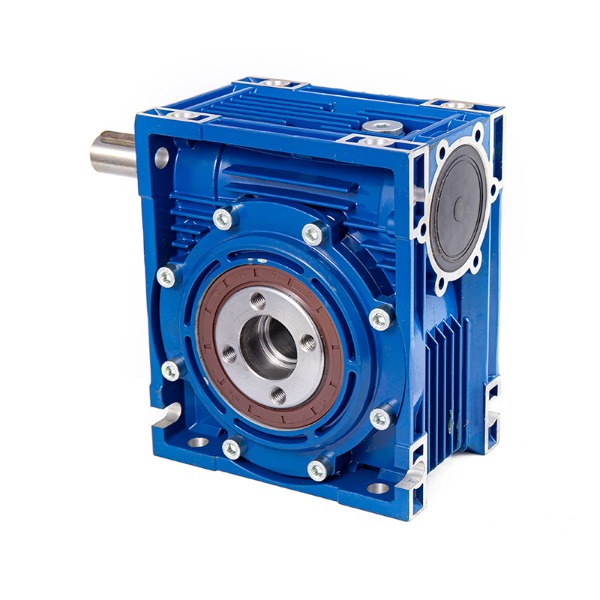
Worm gearboxes transmission is a fundamental technology in mechanical power transmission, widely used across industries requiring high reduction ratios in compact spaces. Unlike conventional helical or spur gear systems, a worm gearboxes transmission relies on a unique sliding action between a worm (screw) and a worm wheel (gear). This design enables right-angle torque transfer, often with a single reduction stage, while offering inherent advantages such as noise reduction and self-locking capability.
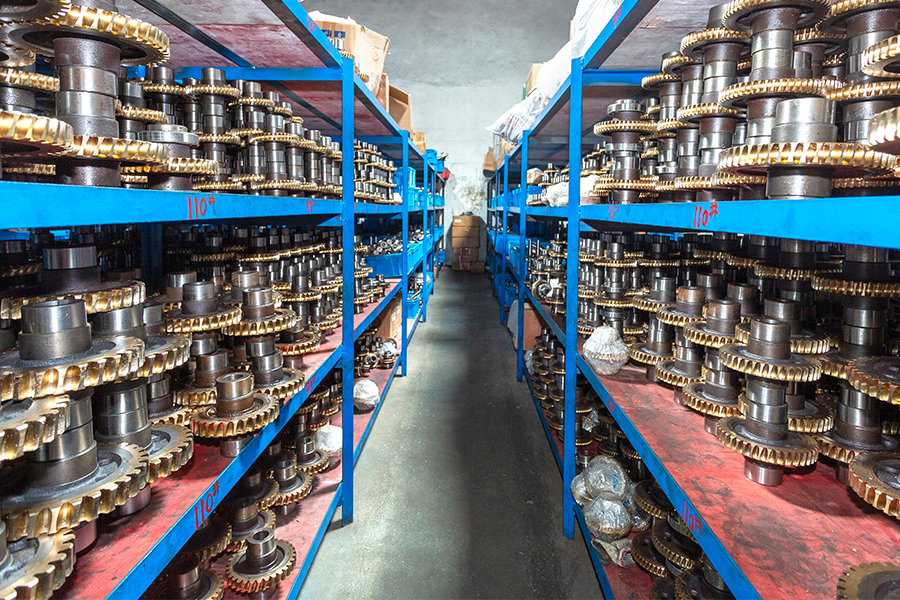
A worm gearboxes transmission consists of two primary components: the hardened steel worm (input) and the bronze or cast iron worm wheel (output). The worm has one or more helical threads that engage the teeth of the wheel. As the worm rotates, its threads push the wheel teeth, causing the wheel to turn. The axis of the worm is perpendicular to the axis of the wheel, creating a 90-degree drive configuration.
The key mechanical characteristic is that motion is primarily transmitted from the worm to the wheel, but not easily reversed. This occurs because the friction angle between the sliding surfaces typically exceeds the lead angle of the worm, creating a self-locking effect. This makes worm gearboxes transmission ideal for hoists, lifts, and conveyor systems where load holding is critical.
Understanding the pros and cons helps engineers select appropriate drive solutions. Below is a succinct summary:
| Feature | Benefit | Limitation |
|---|---|---|
| Reduction ratio | Up to 100:1 in a single stage | Lower efficiency (50–85%) versus helical gears |
| Noise level | Very quiet operation | Requires precise lubrication |
| Self-locking | Preents back-driving in many designs | Not reliable under vibration or high speed |
| Torque density | High torque in small envelope | Generates more heat |
| Service life | Long if properly rated | Bronze wheel wear with poor lubrication |
Because of their compact form and high reduction ratios, worm gearboxes transmission systems appear in numerous sectors:
When selecting a worm gearboxes transmission for a specific task, engineers should evaluate:
| Parameter | Considerations |
|---|---|
| Input speed | Higher speeds (>1500 rpm) reduce efficiency and increase thermal load |
| Output torque | Must include service factors for shock loads or frequent starts |
| Center distance | Determines overall size and torque capacity |
| Gear ratio | Standard ratios: 5:1, 10:1, 20:1, 30:1, 40:1, 50:1, 60:1 |
| Lubrication type | Synthetic PAO or mineral oils with EP additives |
| Mounting position | Foot, flange, or shaft-mounted; affects oil level design |
The sliding action in a worm gearboxes transmission generates more friction than rolling contact gears. Efficiency depends heavily on the lead angle and lubricant viscosity. For single-start worms (low lead angle), efficiency may drop to 50-60% – but self-locking is more reliable. Multi-start worms (more threads) improve efficiency to 75-85% but reduce or eliminate self-locking.
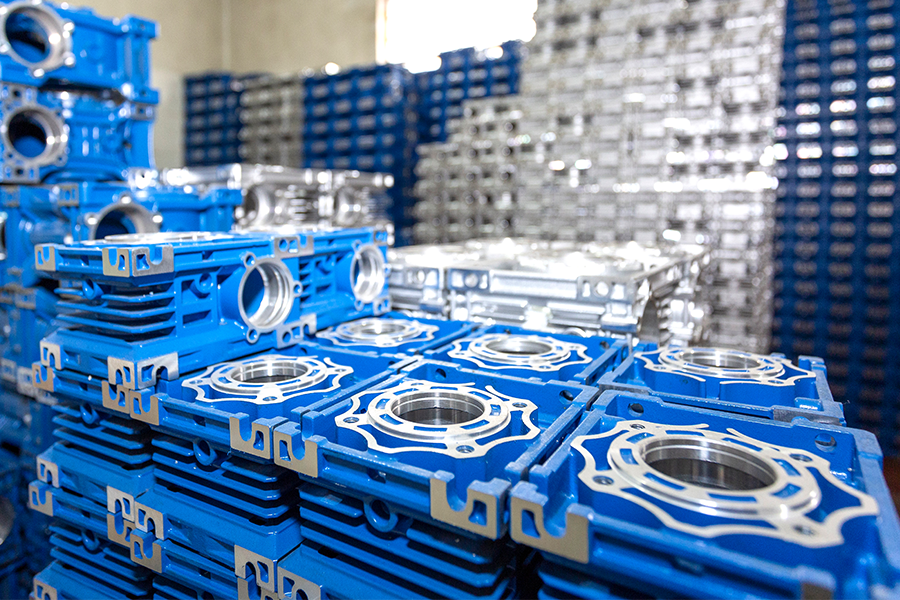
To manage thermal output, manufacturers often design housings with cooling ribs or integrate fan cooling for continuous-duty applications. Proper oil selection and change intervals are critical, as degraded lubricant accelerates bronze wheel wear.
Correct mounting extends service life. Key guidelines include:
Alignment: Misalignment between input and output shafts causes uneven tooth contact and premature failure.
Backlash adjustment: Some worm gearboxes transmission designs allow center distance adjustment to compensate for wear.
Breather position: Install the breather on the highest point in the final mounting orientation to prevent oil leakage.
Initial run-in: A short break-in period (2-4 hours at 50% load) is recommended before full load operation.
Oil change schedule: First change after 100-200 hours (for new gearbox), then every 2500 hours or annually.
Q1: Is a worm gearboxes transmission always self-locking?
No. Self-locking depends on the friction coefficient, lead angle, and surface finish. As a rule of thumb, single-start worms with lead angles below 5-6° provide self-locking under static conditions. Multi-start worms or high-efficiency designs rarely self-lock. Always verify with manufacturer data.
Q2: Why are worm wheels commonly made of bronze?
Bronze has excellent anti-seizure properties against hardened steel and can embed small debris without damaging the worm. Its low friction coefficient under boundary lubrication conditions is essential for the sliding contact in a worm gearboxes transmission.
Q3: Can a worm gearboxes transmission be back-driven manually?
In self-locking designs, back-driving is impossible or requires very high reverse torque. For non-self-locking models, manual reverse rotation may be possible but not recommended without braking systems due to uncontrolled acceleration.
Q4: What is the typical service life of a worm gearboxes transmission?
With proper lubrication and within rated loads, 15,000–25,000 operating hours is common before significant efficiency loss occurs. Wheel wear is the usual limiting factor. Periodic backlash measurement helps predict remaining life.
Q5: How do I increase efficiency of an existing worm gear drive?
Switch to a synthetic polyalphaolefin (PAO) or polyglycol lubricant designed for worm gears. Ensure oil level is correct. Reduce input speed if possible. However, note that higher efficiency usually reduces self-locking capability.

1. What is an NRV Worm Gear Reducer? The NRV worm gear speed reducer is a widely used mechanical device...
View MoreIn the stage of modern industrial precision transmission, Worm Gear Machine Screw Lift has become the cor...
View MoreWhat is worm gear speed reducer A worm gear speed reducer is a reduction transmission device composed of ...
View More1. Introduction to Worm Gear Speed Reducers A worm gear speed reducer is a specialized type of gearbox de...
View More


We value your suggestions and questions. If you have any questions about our products and services, please contact us. We will treat you responsibly and reply to your information as soon as possible.