-
 [email protected]
-
 +86-13605711675
[email protected]
+86-13605711675

In the field of mechanical engineering, worm gear speed reducers are essential components in many applications, ranging from industrial machinery to automotive systems. These devices provide efficient transmission of power while reducing the speed of rotating components.
A worm gear speed reducer is a type of gear mechanism that consists of two main components: a worm (a screw-like gear) and a worm wheel (a gear that meshes with the worm). The primary function of a worm gear speed reducer is to reduce the speed of a rotating shaft while simultaneously increasing the torque output. This is achieved through the unique geometry of the worm and wheel, which allows for a high reduction ratio in a compact space.
Worm gears are commonly used in applications that require high torque and low-speed operations, such as conveyor systems, elevators, and specialized machinery. Due to their self-locking capabilities, they are also ideal for applications that require a high degree of safety, such as in lifting systems.
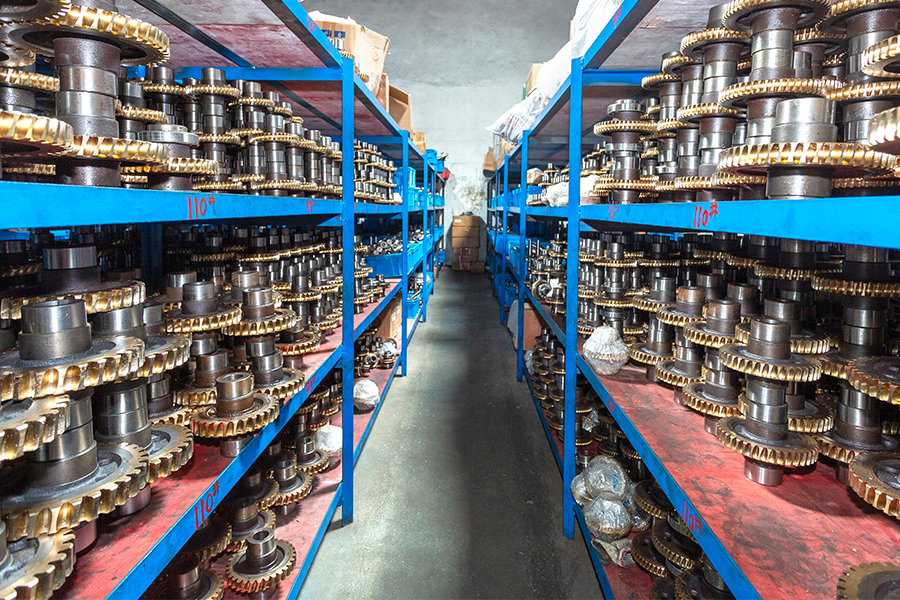
The mechanics of a worm gear speed reducer are based on the interaction between the worm and the worm wheel. The worm, which resembles a screw, is typically made of hardened steel or bronze, and it meshes with the worm wheel, which is usually made of bronze or cast iron. The teeth of the worm are designed in such a way that they engage with the teeth of the worm wheel, creating a smooth transfer of motion and force.
Reduction Ratio:
The reduction ratio of a worm gear is determined by the number of teeth on the worm wheel in relation to the number of starts on the worm. The higher the number of teeth on the wheel compared to the starts on the worm, the higher the reduction ratio.
Self-locking Feature:
Worm gears can be designed to be self-locking, meaning that the worm can rotate the wheel, but the wheel cannot drive the worm in the reverse direction. This feature is particularly useful in applications like hoisting and elevator systems, where safety is critical.
Efficiency Considerations:
While worm gears are highly efficient in terms of reducing speed and increasing torque, they do have lower efficiency compared to other types of gears, especially when the reduction ratios are high. The friction between the worm and the worm wheel contributes to energy losses, which must be taken into account in the design of systems using worm gear speed reducers.
When designing a worm gear speed reducer, several factors must be taken into account to ensure optimal performance:
Material Selection:
The materials chosen for the worm and worm wheel must have excellent wear resistance, as the two components are in constant contact and subjected to high friction. Bronze and steel are common materials used in the manufacture of worm gears, as they offer good durability and load-bearing capabilities.
Lubrication:
Proper lubrication is crucial to the longevity and performance of a worm gear speed reducer. Lubricants reduce friction between the worm and the wheel, thereby improving efficiency and preventing premature wear. The choice of lubricant and its application method is vital in ensuring the smooth operation of the reducer.
Mounting and Housing:
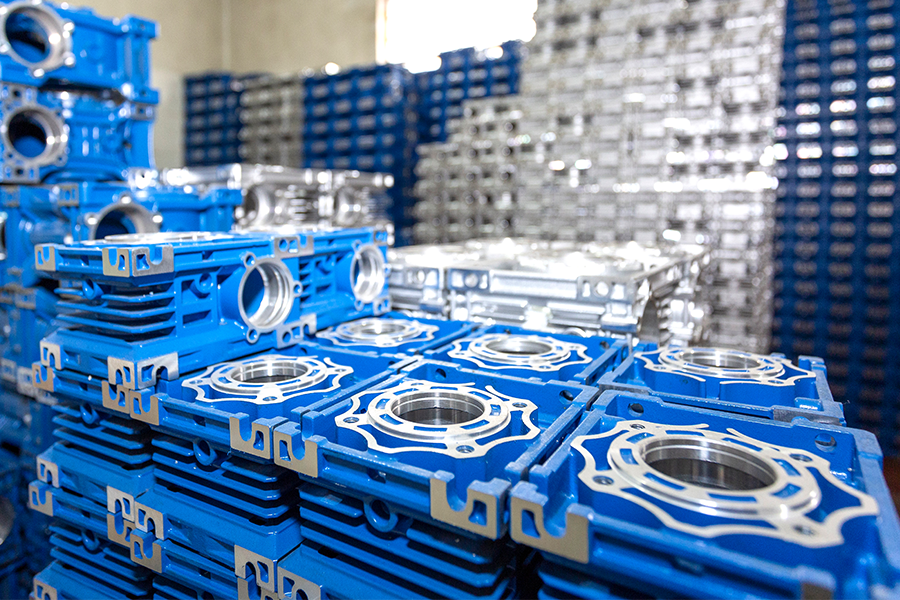
The design of the housing for the worm gear speed reducer must be such that it provides adequate support and protection for the gears while allowing for easy maintenance. Housing materials should be durable, and designs should allow for the easy replacement of components such as the worm or worm wheel when necessary.
Thermal Management:
Worm gears generate significant heat during operation due to friction. Adequate cooling and heat dissipation mechanisms, such as heat sinks or fan cooling, should be integrated into the design to prevent overheating and maintain optimal efficiency.
High Torque Output:
Worm gear speed reducers are well-known for their ability to deliver high torque at low speeds, making them ideal for heavy-duty applications. This feature is especially beneficial in industries such as mining, construction, and material handling.
Compact Design:
The unique design of the worm gear allows for a high reduction ratio in a compact and lightweight package. This makes worm gear speed reducers a popular choice in situations where space is limited or when the design requires a high torque output without increasing the size of the machine.
Noise Reduction:
Worm gears tend to operate more quietly than other gear systems, which makes them suitable for applications where noise reduction is a priority, such as in medical equipment or precision machinery.
Self-locking Mechanism:
As mentioned earlier, the self-locking feature of worm gears provides an added level of safety, preventing reverse motion unless external force is applied. This makes worm gear speed reducers ideal for use in lifting systems or other applications where accidental movement could be dangerous.
Worm gear speed reducers are utilized in a variety of industries, including:
Industrial Machinery: For applications requiring high torque and low speed.
Conveyor Systems: To reduce the speed of conveyor belts while providing the necessary torque.
Lifting and Hoisting: Their self-locking feature makes them ideal for cranes and elevators.
Automotive Systems: Worm gears are used in steering mechanisms, especially in heavy vehicles.
Food Processing: Worm gears are also used in food machinery for precise control of processing speed.
| Feature | Worm Gear Speed Reducer |
|---|---|
| Maximum Reduction Ratio | 100:1 to 300:1 |
| Typical Efficiency Range | 40% - 90% |
| Maximum Output Torque (Nm) | 5000 |
| Self-locking Capability | Yes |
| Common Applications | Elevators, conveyors, hoisting systems |
| Ideal Operating Speed Range (RPM) | 10 - 1000 |
1. What is the maximum reduction ratio achievable with a worm gear speed reducer?
Worm gears can achieve high reduction ratios, typically ranging from 100:1 to 300:1, depending on the number of teeth on the worm wheel and the number of starts on the worm.
2. How do I ensure the efficiency of my worm gear speed reducer?
To maximize efficiency, it is important to select high-quality materials for the worm and wheel, ensure proper lubrication, and regularly maintain the system to reduce friction and wear.
3. Can worm gear speed reducers be used in high-speed applications?
While worm gears excel at providing high torque at low speeds, they are not typically used in high-speed applications due to the frictional losses that occur at higher speeds.
4. How can I prevent overheating in a worm gear speed reducer?
Effective cooling systems, such as integrated heat sinks or fan cooling, can help dissipate heat and prevent the reducer from overheating during prolonged operation.
5. What materials are commonly used to manufacture worm gears?
Worm gears are typically made from hardened steel or bronze for the worm, and bronze or cast iron for the worm wheel. These materials offer good wear resistance and durability under high-load conditions.
Worm gear speed reducers are vital components in many mechanical systems, offering efficient speed reduction, high torque output, and compact design. By understanding their mechanics and design considerations, engineers can select the appropriate worm gear speed reducer for their specific applications, ensuring optimal performance and longevity of the equipment.
1. What is an NRV Worm Gear Reducer? The NRV worm gear speed reducer is a widely used mechanical device...
View MoreIn the stage of modern industrial precision transmission, Worm Gear Machine Screw Lift has become the cor...
View MoreWhat is worm gear speed reducer A worm gear speed reducer is a reduction transmission device composed of ...
View More1. Introduction to Worm Gear Speed Reducers A worm gear speed reducer is a specialized type of gearbox de...
View More
We value your suggestions and questions. If you have any questions about our products and services, please contact us. We will treat you responsibly and reply to your information as soon as possible.




 English
 русский
